A Property Manager’s Emergency Response Plan for Restoration Events
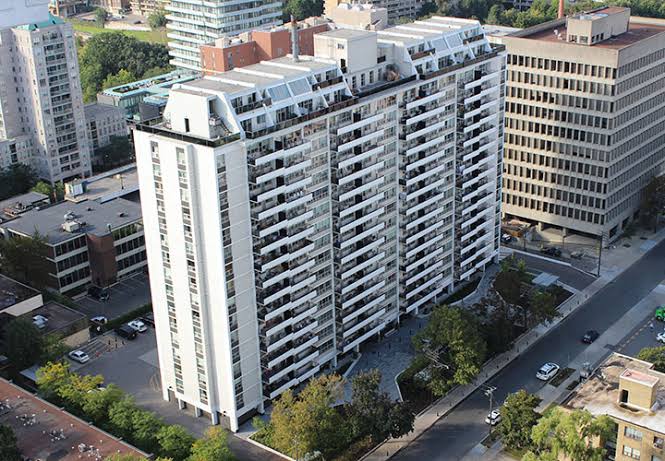
Property managers in Toronto and the GTA carry a level of responsibility that most people outside the industry don’t fully appreciate. When something goes wrong with a managed property — a flooded basement in an apartment complex, a sewage backup affecting multiple units, fire damage to a commercial building — the property manager is the person at the center of every decision. They are accountable to building owners, obligated to tenants, responsible for coordinating trades, and expected to manage communications across every stakeholder group, often simultaneously and under significant time pressure.
Having a clear, documented emergency response plan before a restoration event occurs is one of the most important things a property manager can do — not just for the property, but for everyone who depends on them when things go wrong. This guide outlines the key components of an effective emergency response plan and explains how a trusted commercial property restoration partner supports that plan when it matters most.
Why Property Managers Need a Documented Plan
In the absence of a plan, emergencies are managed reactively — decisions are made under stress, with incomplete information, by people who may not be clear on their roles. This leads to delayed responses, inconsistent communication, missed steps in the restoration process, and outcomes that are more costly and disruptive than they needed to be.
A documented emergency response plan changes this. It defines in advance who does what, in what order, and who they contact at each stage. When a water damage event occurs at 2 a.m. in one of your managed apartment complexes, the person who discovers it shouldn’t have to figure out the process from scratch. The plan tells them exactly what to do and who to call — and it starts a response that is fast, coordinated, and consistent with your obligations as a property manager.
A good plan also demonstrates due diligence. In the event of tenant complaints, legal disputes, or insurance investigations, a documented response protocol that was followed consistently is meaningful evidence that the property manager acted responsibly.
The Core Components of an Effective Emergency Response Plan
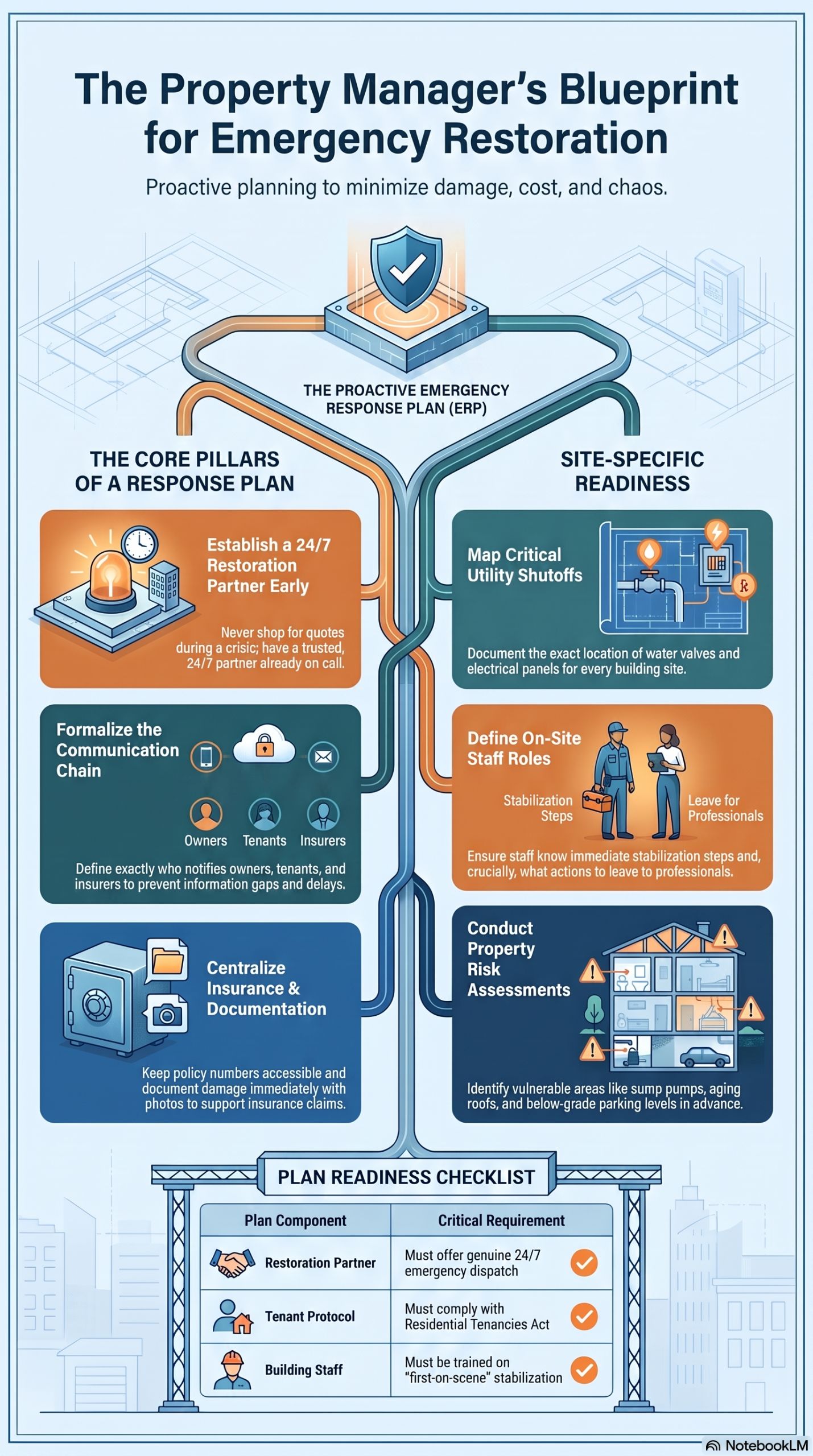
1. A Clear Chain of Communication
Every managed property should have a defined communication chain for emergency events — who is notified first, who notifies the building owner, who contacts the restoration company, and who communicates with tenants. This chain should be documented with current contact information for every person in it, including after-hours numbers, and reviewed regularly to keep it accurate.
In larger organizations that work with property managers across multiple buildings, this chain should also be clear about the escalation path — when does a site-level property manager escalate to a regional manager, and when does the regional manager loop in senior ownership?
2. Pre-Established Relationships With a Restoration Partner
The single most impactful thing a property manager can do before an emergency occurs is establish a relationship with a commercial property restoration company — one that understands the specific demands of managed properties and is ready to respond the moment they’re called.
Calling around for quotes while a basement is flooding, or while smoke damage is spreading through a commercial building, is not a workable approach. The right restoration partner should already be identified, their contact information should be in the plan, and ideally there should be an existing relationship so that when you call, they know who you are and what type of properties you manage.
For property managers in Toronto and the GTA, working with a restoration company that offers genuine 24/7 response is non-negotiable. Emergencies in apartment complexes and commercial buildings do not happen on a schedule. Water doesn’t wait for business hours, and neither can an effective response.
3. Site-Specific Risk Assessments
An effective emergency response plan is not generic — it accounts for the specific characteristics of each property under management. For each building in your portfolio, document the following:
- Location of the main water shutoff valve and who is authorized to operate it
- Location of the electrical panel and any known concerns about the electrical system
- Location of the sump pump and the last date it was tested and serviced
- Age and condition of the roof, plumbing, and any mechanical systems with known risk factors
- Below-grade spaces, crawlspaces, or parking levels that are particularly vulnerable to water intrusion
- Units or areas with a history of previous water damage or moisture issues
- Any accessibility limitations that would affect a restoration crew’s ability to respond — narrow access points, secured areas, elevator dependencies
This site-specific information allows both your team and your restoration partner to respond faster and more effectively because the basic facts about the property are already known.
4. Tenant Communication Protocols
In apartment complexes and multi-tenant commercial properties, how you communicate with tenants during a restoration event is as important as how you manage the physical response. Under Ontario’s Residential Tenancies Act, tenants have rights that property managers must respect during restoration events — including the right to be informed about conditions affecting their units and the right to a habitable living environment.
Your plan should specify how tenant notifications will be delivered — written notice, email, posted signage, or direct contact depending on the circumstances — what information will be shared and at what intervals, and who is responsible for managing tenant communications throughout the event.
Clear, proactive tenant communication reduces complaints, reduces the likelihood of formal disputes, and demonstrates the kind of professional conduct that protects a property manager’s reputation and legal standing. Leaving tenants uninformed or providing inconsistent information during a restoration event is one of the most common sources of conflict that follows these situations.
5. Insurance and Documentation Protocols
Every managed property should have its insurance information readily accessible — not buried in a filing cabinet that requires a specific person to locate. Your emergency response plan should include the insurer’s emergency contact number, your policy number, and the key coverage details most relevant to emergency events: water damage, sewer backup, property contents, and any endorsements applicable to commercial properties.
From the moment a restoration event begins, documentation should start. Photographs and video of the initial damage, moisture readings, the timeline of events, and records of all communications — with the restoration company, the insurer, the building owner, and tenants — create the paper trail that supports an insurance claim and protects the property manager if questions are raised later.
Working with a commercial property restoration company that documents its own scope of work, moisture levels, and remediation process in detail means that the professional side of this record is already covered. The property manager’s responsibility is to ensure that the building management side — notifications, decisions made, communications sent — is equally well documented.
6. Defined Roles for Building Staff
In buildings with on-site superintendents, building operators, or security personnel, your emergency response plan should clearly define their role when a restoration event occurs. They are typically the first on-scene, and their actions in the first few minutes matter.
They should know:
- What immediate steps to take for the most common emergency types — locating and shutting off water in a flooding event, evacuating areas affected by fire or sewage backup, and securing the affected area to prevent tenant access before it’s safe
- What not to do — including which actions should be left to the restoration team rather than attempted by on-site staff
- Exactly who to call, in what order, and what information to have ready when they make that call
Well-trained building staff who understand their role in the first response extend the property manager’s reach considerably — particularly in after-hours situations where the manager themselves may not be on-site for the first critical minutes of an event.
Working With a Commercial Property Restoration Partner
The relationship between a property manager and their commercial property restoration company is most effective when it is built before an emergency occurs — not during one. Property managers in Toronto and the GTA who take the time to establish this relationship in advance gain several practical advantages.
The restoration company develops familiarity with the managed properties — their layout, their specific vulnerabilities, their tenant population, and the property manager’s communication preferences. When an emergency call comes in, the response is faster and better calibrated to the actual situation because the basic context is already established.
A restoration partner that is experienced in working with property managers in a commercial context also understands the particular pressures of the role — the need to manage multiple stakeholder relationships simultaneously, the legal obligations to tenants, the reporting requirements to building owners, and the importance of minimizing operational disruption to the property. These are different considerations from a standard residential restoration project, and they require a different approach to project management and communication.
For larger property management portfolios, some restoration companies — including Restoration Mate — are structured to work with property managers across multiple buildings under a single point of contact, streamlining communication and ensuring consistency of service across the portfolio regardless of which specific location is affected.
The Role of 24/7 Response in Property Management Emergencies
The most carefully written emergency response plan is only as effective as the partners supporting it. For property managers in Toronto and the GTA, 24/7 response from a commercial property restoration company is not a nice-to-have — it is a foundational requirement.
Water damage that begins at midnight doesn’t pause while you wait for a business to open in the morning. A sewage backup affecting multiple units in an apartment complex on a holiday weekend generates immediate, urgent tenant concerns that require immediate, tangible action. Fire or smoke damage to a commercial building must be assessed and stabilized without delay to prevent secondary damage and allow business operations to resume as quickly as possible.
When Restoration Mate’s number is in your emergency response plan, the 24/7 response that answers that call is not an answering service. It is a qualified team that can be dispatched immediately, with the right equipment for the situation, ready to begin assessment and stabilization the moment they arrive on-site.
Building a Relationship Before You Need It
If you manage commercial properties, apartment complexes, or multi-unit residential buildings in Toronto or the GTA and don’t yet have an established relationship with a commercial property restoration company, now is the right time to build one — not after an emergency has already begun.
Restoration Mate works with property managers across the Greater Toronto Area and beyond, providing commercial property restoration services that are structured around the specific demands of managed properties. We understand the obligations, the timelines, the communication requirements, and the importance of minimizing disruption to tenants and building operations throughout the restoration process.
We are available 24/7 across all of our service locations, and we are ready to establish a working relationship with your team before an emergency requires it.