
Commercial Mold Remediation in Toronto: Safeguard Your Business
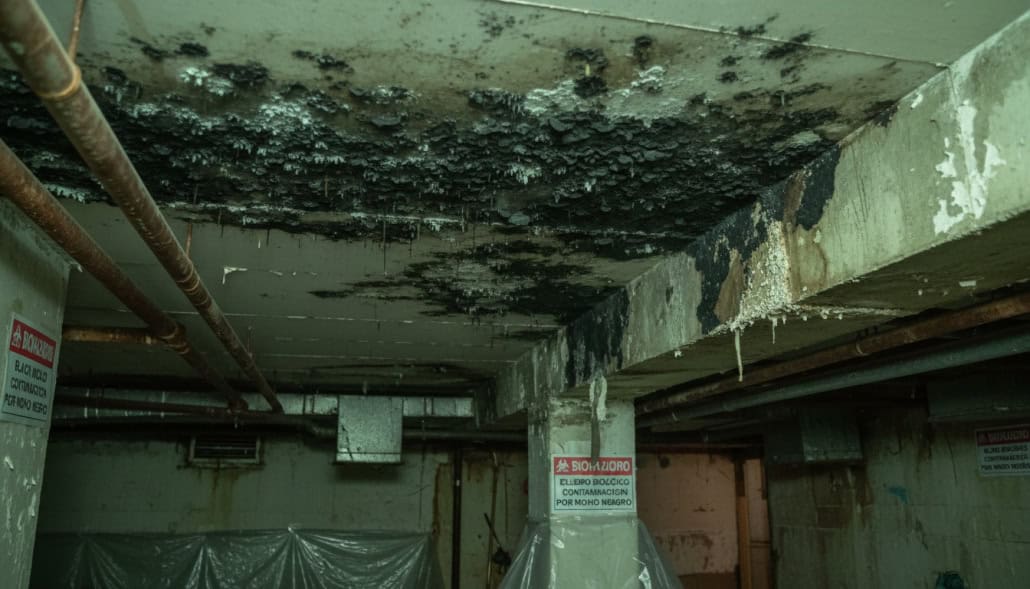
When mould appears in a commercial space, the consequences extend well beyond the property itself. Unlike a residential mould problem which primarily affects the homeowner and their family mould in a business environment affects employees, customers, tenants, and the operational continuity of the business itself. In some situations, it can trigger regulatory scrutiny, legal liability, and reputational damage that outlasts the mould problem by a significant margin.
For Toronto business owners, commercial landlords, and property managers, understanding how mould affects a business environment and what effective remediation looks like in that context is essential knowledge, not just for when a problem arises, but as part of responsible building management overall.
The Business Cost of Ignoring Mould
Mould in a commercial setting is rarely a problem that resolves itself or stabilizes on its own. Without intervention, it spreads and the longer it goes unaddressed, the more expensive and disruptive the remediation becomes. But the direct cost of remediation is only one part of the picture. The broader business costs of ignoring a mould problem can be significantly greater.
Employee Health and Productivity
Employees who work in a mould-affected environment may experience a range of health effects respiratory irritation, headaches, fatigue, and worsening allergy or asthma symptoms. These effects don’t announce themselves as mould-related. Instead, they manifest as increased sick days, reduced concentration, and lower productivity costs that are real but rarely attributed to their actual cause.
In more serious cases, employees who become aware that they are working in a mould-affected environment or who experience health effects they associate with it may raise formal concerns, reduce their hours, or seek to leave the organization entirely. The connection between workplace air quality and employee wellbeing is increasingly well understood, and businesses that are seen to disregard it face real workforce consequences.
Customer and Client Perception
For businesses that serve customers on-site — retailers, restaurants, healthcare providers, service businesses, and many others — the condition of the physical space is directly tied to customer perception and trust. Visible mould, musty odours, or any indication that a space is poorly maintained can drive customers away and generate negative reviews that are difficult to overcome.
In industries where health and cleanliness expectations are particularly high food service, healthcare, childcare, fitness the reputational consequences of a known mould problem can be severe and long-lasting.
Legal and Regulatory Exposure
Toronto businesses operating in commercial spaces have obligations that residential property owners do not. Ontario’s Occupational Health and Safety Act (OHSA) requires employers to take reasonable precautions to protect the health and safety of workers — and that obligation extends to the air quality of the indoor work environment. A mould problem that is known and not addressed can constitute a workplace health and safety violation, with the potential for orders, fines, and in serious cases, prosecution.
Commercial landlords in Toronto have similar obligations under property standards bylaws and the Commercial Tenancies Act, with tenants having legal recourse when a landlord fails to maintain a property in a condition fit for its intended use.
The documentation trail created by a mould complaint from employees, tenants, or regulatory inspectors can become a significant legal liability if the response is inadequate or delayed.
Business Interruption
Depending on the scope of the mould problem and the type of business affected, remediation may require temporary closure of part or all of a commercial space. While a well-managed remediation project minimizes disruption through careful containment and phased work, a mould problem that has been allowed to spread extensively may require more significant operational pauses.
The cost of that disruption lost revenue, staff scheduling challenges, customer communication is almost always greater when a problem is discovered late than when it is caught and addressed early.
Common Sources of Mould in Toronto Commercial Buildings
Mould in commercial settings most often traces back to one of several identifiable moisture sources. Understanding these sources helps business owners and property managers recognize warning signs before a full mould problem develops.
HVAC system failures are among the most significant sources in multi-storey commercial buildings. When condensate drain pans become blocked, when ductwork develops leaks, or when air handling units aren’t maintained properly, moisture accumulates in the system and can be distributed throughout the building via the air supply.
Roof membrane failures are particularly relevant for Toronto commercial properties, many of which have flat or low-slope roofs that require regular maintenance and periodic replacement. When the membrane fails — through age, storm damage, or improper installation — water infiltrates slowly into the building envelope and roof deck, often going undetected until mould growth is already well established.
Plumbing leaks in multi-tenant buildings can travel through floor assemblies and wall cavities across multiple units before making themselves visible. A slow leak on an upper floor may not be discovered until mould begins appearing in the ceiling of the unit below.
Poor envelope performance — gaps in cladding, failed window seals, inadequate flashing around penetrations allows exterior moisture to infiltrate the building structure continuously, creating chronic damp conditions in wall assemblies.
Below-grade moisture intrusion in buildings with basement or underground parking levels is a persistent challenge, particularly in older Toronto commercial properties where original waterproofing systems have aged beyond their effective lifespan.
What Effective Commercial Mould Remediation Involves
Commercial mould remediation shares the same fundamental principles as residential remediation identify the moisture source, contain the affected area, remove contaminated materials, treat remaining surfaces, verify dryness, and reconstruct. But the application of those principles in a commercial environment requires additional planning, coordination, and expertise.
Assessment That Accounts for Building Complexity
Commercial buildings are more complex than residential properties larger floor plates, more intricate mechanical systems, and more extensive concealed spaces all make a thorough assessment more demanding. Effective commercial remediation begins with a comprehensive moisture investigation that uses professional equipment to map the full extent of contamination not just what’s visible on the surface.
Containment That Protects Occupied Areas
In most commercial remediation projects, the goal is to contain and resolve the problem without shutting down the entire operation. Properly engineered containment sealed work zones with negative air pressure and HEPA filtration — allows remediation work to proceed in one area while adjacent spaces remain safely occupied.
This requires experience and careful project management. The containment setup must be appropriate for the building’s air handling configuration, and the work schedule must account for building occupancy patterns.
Phased Project Management
Large commercial remediation projects are frequently executed in phases addressing one section of a building at a time to minimize disruption, allow continued occupancy in unaffected areas, and manage the scope of work in a controlled sequence. Effective phasing requires clear planning and communication with building management, tenants, and staff throughout the project.
HVAC System Remediation
Because commercial HVAC systems can both contribute to mould development and distribute spores through a building, any thorough commercial remediation must include an evaluation of the air handling system. Depending on findings, this may involve cleaning or replacing ductwork components, treating air handling units, and confirming that the system is not recirculating contaminated air into remediated spaces before work is complete.
Documentation for Insurance and Compliance
Commercial remediation projects require comprehensive documentation moisture readings before and after drying, materials removed, methods applied, and post-remediation verification results. This documentation supports insurance claims, demonstrates regulatory compliance, and provides a defensible record if questions about the remediation arise from tenants, employees, or regulators after the project is complete.
Acting Early Protects More Than the Building
The most consistently reliable way to protect a Toronto business from the full range of consequences that come with a commercial mould problem is to act early and to recognize that the cost of early action is almost always significantly less than the cost of delayed action.
This means:
- Taking moisture complaints seriously as soon as they arise, rather than waiting to see if they resolve on their own
- Investigating musty odours in any area of a commercial space, even if no visible mould is present
- Scheduling regular building assessments as part of standard property management practice particularly for older Toronto commercial buildings with aging mechanical systems and building envelopes
- Responding immediately when a water damage event occurs in any part of a commercial building, ensuring that drying and remediation are completed properly rather than superficially
Every week that a mould problem goes unaddressed in a commercial building is a week it has to spread, a week employees are exposed, and a week the eventual remediation cost grows.
Restoration Mate: Commercial Mould Remediation Across Toronto
Restoration Mate works with Toronto business owners, commercial landlords, property management companies, and condo corporations to deliver professional mould remediation that minimizes business disruption while resolving the problem completely.
Our teams are experienced managing complex commercial projects from assessment and containment through material removal, structural drying, HVAC evaluation, and full reconstruction. We work directly with commercial insurers, provide comprehensive project documentation, and coordinate closely with building management throughout every stage of the work.
We understand the unique pressures of commercial remediation the need to maintain operations where possible, the regulatory obligations involved, and the importance of a documented, verifiable outcome. Our teams are available 24 hours a day, every day of the year, across all of our service locations.
📞 Toronto & Scarborough: 647-277-1178
📧 info@restorationmate.ca
🌐 restorationmate.ca



Leave a Reply
Want to join the discussion?Feel free to contribute!